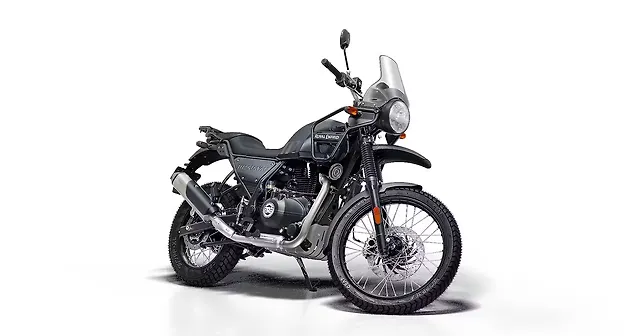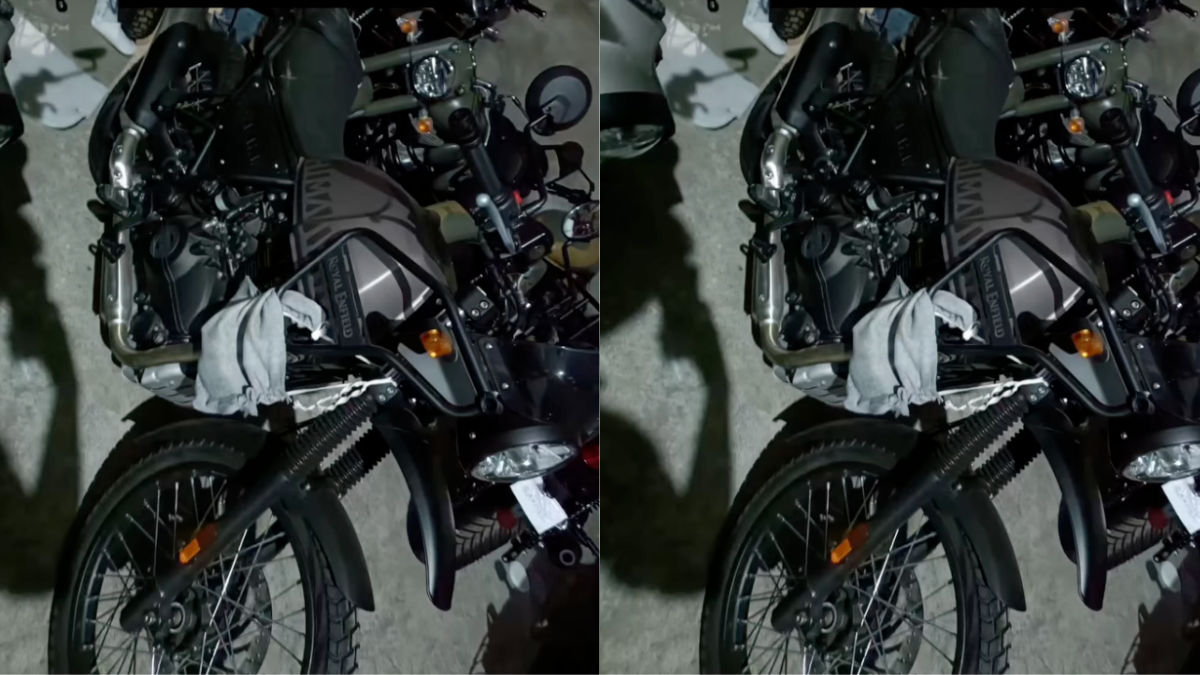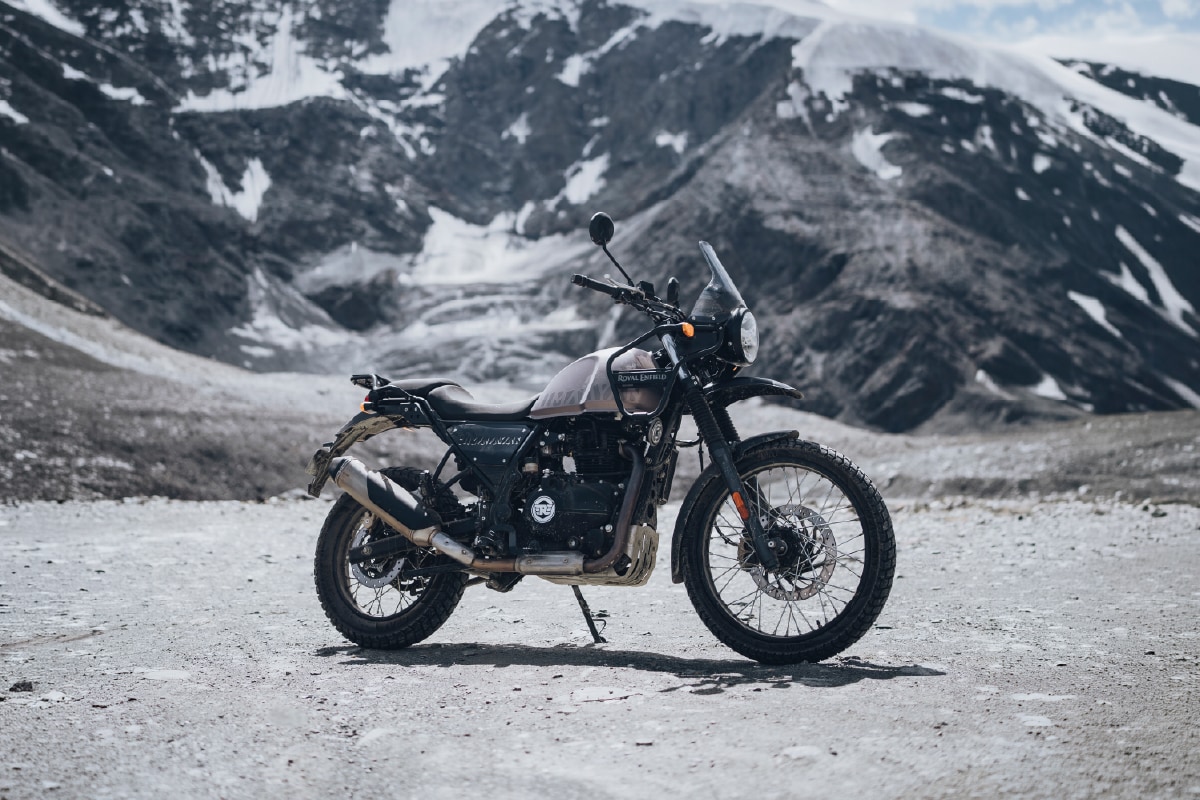
Royal Enfield has done something smart with the Himalayan badge: it has split the family in two. If the Himalayan 450 is the newer, more powerful, more tech-heavy adventure bike, the freshly launched Himalayan 440 is the one aimed at riders who want the original formula with a little more punch and a lot less complexity.
Priced at ₹2.29 lakh, ex-showroom, Tamil Nadu, the Himalayan 440 arrives well below the Himalayan 450, which now starts at around ₹3.08 lakh ex-showroom. That gap of roughly ₹79,000 is not accidental. Royal Enfield clearly wants the two motorcycles to appeal to different kinds of buyers instead of fighting each other in the showroom.
The launch also marks 10 years of the Himalayan nameplate, and Royal Enfield is leaning into that heritage with a special anniversary badge on the tank of initial production units. Bookings opened on September 4 across dealerships and online channels.
What the Himalayan 440 gets
At the centre of the new motorcycle is a 443cc, single-cylinder, long-stroke engine that makes 25.4 bhp at 6,250rpm and 34Nm at 4,000rpm. It is paired with a 6-speed gearbox, which is a useful upgrade over the older 411cc Himalayan’s 5-speed setup. Royal Enfield also says the revised motor is tuned for lower NVH, so this should feel more refined than the previous-gen machine.
This isn’t a big, raucous ADV trying to win spec-sheet wars. It’s more about easy torque and relaxed progress. In that sense, it stays true to the old Himalayan’s personality, only with a bit more breathing room on the highway.
Underpinning it is a half-duplex split-cradle frame, 41mm telescopic front forks with 200mm travel, and a linkage-type rear monoshock offering 180mm travel. Ground clearance is a healthy 220mm, while the seat height is a far more approachable 800mm. For many Indian riders, that will matter more than peak horsepower figures.
The bike rides on a 21-inch front and 17-inch rear wire-spoke wheel combination, wearing tube-type tyres in 90/90-21 and 120/90-17 sizes. Braking comes from a 300mm front disc and 240mm rear disc, with dual-channel ABS standard and switchable rear ABS for off-road use.
Kerb weight stands at 199kg, and the fuel tank capacity is 15 litres.
Features keep things deliberately simple
Royal Enfield has resisted the temptation to load up the Himalayan 440 with electronics. You get an LED headlamp, a digital-analogue instrument cluster, Tripper turn-by-turn navigation, USB Type-C charging and the new ByBre braking setup.
What you do not get is ride-by-wire, riding modes, a TFT display or full-map navigation. That’s the point. The Himalayan 440 is being positioned as the easier, more accessible ADV in Royal Enfield’s line-up, not a cheaper version of the Himalayan 450.
For a lot of buyers, that simplicity will be the real selling point. There are fewer screens to fuss over, fewer menus to learn and fewer things that can feel intimidating if this is your first proper adventure motorcycle.
Royal Enfield has launched the bike in three colours: Mustang Brown, Sela Black and Nelong White. The company’s official listing for the motorcycle is live as well on the Royal Enfield website.
Himalayan 440 vs Himalayan 450
This is where the family split becomes obvious.
The Himalayan 450 uses a 452cc liquid-cooled Sherpa engine, produces 40.02 PS and 40Nm, and brings a 6-speed gearbox, ride-by-wire, ride modes, a 4-inch TFT cluster, full Google Maps navigation, 43mm USD forks and a larger 17-litre tank. It is the more serious machine if you regularly tour fast, ride harder off-road or simply want the newer platform.
The Himalayan 440 counters with a lower 800mm seat, simpler hardware and a much friendlier sticker price. It is also slightly heavier at 199kg versus the Himalayan 450’s 196kg, but the easier seat height may make more of a difference in the real world.
Here’s the practical split:
- Himalayan 440: better if you want a lower seat, simpler mechanics and a more affordable entry into adventure biking
- Himalayan 450: better if you want more power, more tech and stronger highway performance
For buyers comparing the two, the 440 is not a replacement for the 450. It is a different answer to the same question.
Who else should you compare it with?
The most obvious rival is the Yezdi Adventure, which sits in a similar price band at roughly ₹2.09 lakh to ₹2.16 lakh ex-showroom in Tamil Nadu, and offers a 334cc liquid-cooled engine, traction control, ride modes and cross-spoke tubeless wheel options on select variants. On paper, the Yezdi has the more feature-rich package, while the Himalayan 440 brings the stronger brand pull and lower seat height.
If you are shopping in this part of the market, the list should also include the old-school Royal Enfield Himalayan 440 launch preview coverage for context, and perhaps even the Royal Enfield sales surge in August 2026 piece if you want to understand how well the brand is currently resonating with Indian buyers.
For someone already cross-shopping REs, the Scram 440 is another internal rival worth a look, especially if you are deciding whether you really need the full 21-inch front wheel and ADV stance or just want a rugged commuter-tourer with some attitude.
Should Indian buyers care?
Yes, because the Himalayan 440 hits a very specific sweet spot.
It gives shorter riders a friendlier 800mm seat. It keeps the mechanical package approachable. It should be easier to live with in traffic, easier to pick up after a drop, and easier to justify financially than the Himalayan 450. And at ₹2.29 lakh ex-showroom, it now sits right in the zone where buyers often start comparing it with mid-size commuters, entry-level street bikes and other adventure-flavoured machines.
That makes the new Himalayan more than just a nostalgia play. It gives Royal Enfield a simpler route into the ADV segment, while the 450 remains the more ambitious, more expensive option for riders who want a bigger step up.
The result is a cleaner, more logical lineup than before. One badge, two very different personalities.