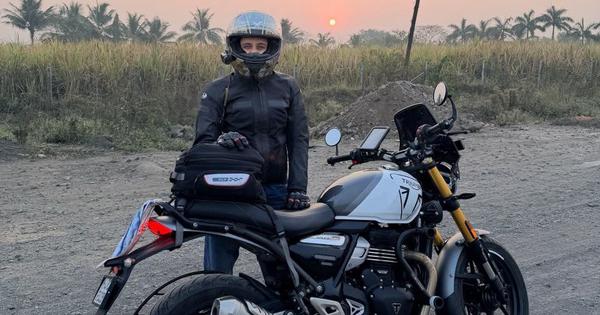
Two wheels are supposed to mean freedom. For many Indian women riders, they do — until a stranger decides that freedom needs to be policed, mocked or punished.
The recent Gurugram road-rage case involving rider Shivani Chauhan brought that reality into sharp focus. In the widely shared video, Chauhan was hit and thrown off her bike after a car allegedly chased and rammed her. The incident was shocking not just because of its brutality, but because so many women riders recognised the pattern instantly: tailgating, close passes, unwanted attention, being provoked into a race, and the quiet fear that builds each time a bike or car sits too long on your tail.
For women who ride daily, this is not a one-off headline. It is part of the commute.
Freedom, with a side of fear
Scroll’s report on the Gurugram incident and The Indian Express’ deeper feature both point to the same uncomfortable truth: women bikers often have to manage road behaviour that goes far beyond normal traffic nuisance. Some riders spoke about men following them for kilometres. Others described dangerous overtakes, deliberate intimidation, and gestures meant to remind them that they were “out of place” on a motorcycle.
One rider recalled being followed for nearly 45 minutes while travelling between cities, continuing to ride even after losing the group because braking felt riskier than moving. Another said she pulled into a petrol pump when an SUV began shadowing her, choosing a public, well-lit space instead of trying to outpace a stranger. Those reactions sound extreme to a casual observer. For many women riders, they are simply survival instincts.
That constant alertness is exhausting. It also changes how women dress, how they ride and how they plan routes. Some tuck their hair into jackets. Some prefer loose clothing after dark. Some ride in groups because solo riding, especially at night, can feel like a bigger gamble than the bike itself.
The problem is not the machine
This is the part that gets lost when a story becomes viral: the motorcycle is rarely the issue. The problem is behaviour around it.
A woman on a commuter scooter, a 150cc motorcycle or a big adventure bike faces the same road culture problem — men who see her as a novelty, a challenge or an invitation. In that sense, the conversation is bigger than gender and safety. It is also about how Indian roads reward aggression and punish vulnerability.
The Gurugram case was captured on camera, which is probably why it triggered such a strong reaction. But as multiple riders told The Times of India and The Indian Express, most incidents never get recorded. They happen in the margins: a car that crowds the bike, a rider who slows down to let traffic pass and gets insulted, a stranger who blocks the way to provoke a reaction.
That’s why women riders often talk about “male ego” more than “road rage”. They are not exaggerating. They are naming the pattern.
Why visibility matters
There’s another layer here that matters to anyone shopping for a two-wheeler in India: the growing number of women who want to ride, commute and tour on their own terms.
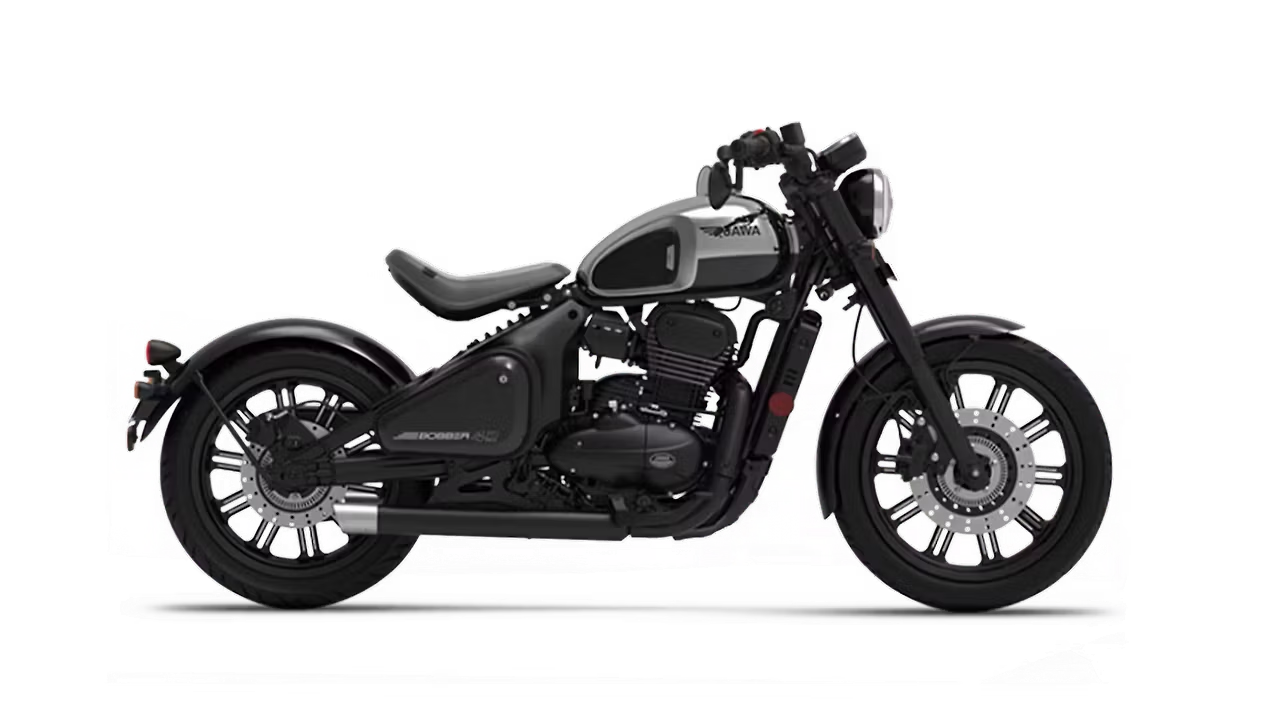
That’s a market reality, not a social media trend. Two-wheeler brands increasingly sell scooters and motorcycles to solo women commuters, college riders and touring enthusiasts who want practicality without giving up independence. On the scooter side, models like the TVS Jupiter with fresh dual-tone updates remain relevant because they offer easy access and low-stress urban mobility. On the motorcycle side, a growing pool of buyers is looking at approachable, confidence-building machines rather than oversized, intimidating hardware — which is why bikes like the Royal Enfield Himalayan 440 or even a simpler roadster such as the Jawa 42 All Stars matter in the shopping conversation.
But the bike is only half the equation. If women are still forced to ride like fugitives from unwanted attention, the market has a bigger problem than product planning.
Riding groups, gear and small acts of self-protection
The women riders quoted across these stories have developed a whole toolkit for getting home safely.
- Riding in groups, especially on long trips
- Using lead riders, tail riders and marshals
- Calling fellow riders when they sense they are being followed
- Wearing gear that protects without attracting the wrong kind of attention
- Choosing routes and stops more carefully than most male riders ever have to
This is why stories about women motorcyclists resonate far beyond the biker community. They are about freedom, yes, but also about the invisible labour of staying safe while doing something as ordinary as riding to work or heading out for a weekend breakfast run.
And when a woman rider says she wants to “just ride”, she is not asking for special treatment. She is asking for the same basic assumption every road user should enjoy: that no one else gets to decide who belongs on the road.
For the Indian two-wheeler buyer, that’s a reminder too. A good bike is not just about power, suspension travel or fuel efficiency. It is also about how comfortably and confidently you can live with it in the real world — traffic, parking lots, night rides, shortcuts, and yes, the people around you.
Until road culture catches up with the number of women riding through it, that freedom will keep arriving with a lock on the back.