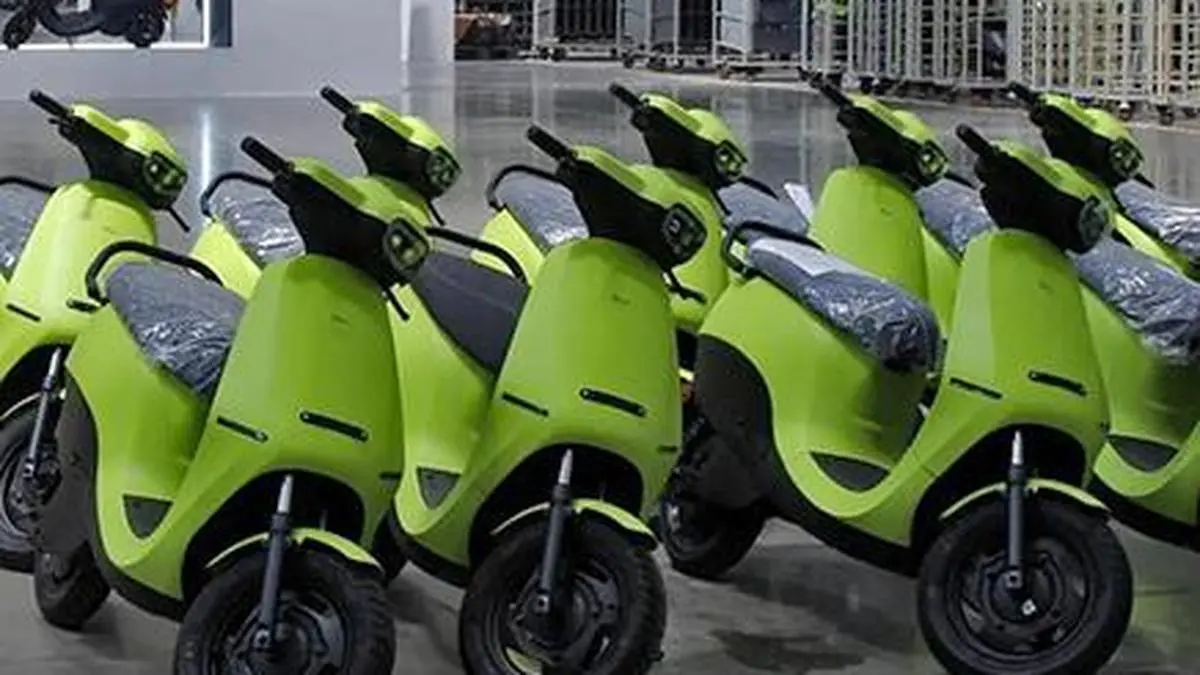
Ola Electric is back in the market for money, and this time the number on the table is as high as Rs 1,500 crore. The company’s board has approved a proposal to raise fresh capital through equity shares or convertible securities, with the exact route to be decided later through options such as a rights issue, QIP, private placement, public offer or other permitted mechanisms.
The timing is notable. Ola Electric had raised around Rs 780 crore through a QIP in June, allotting shares at Rs 35.86 apiece to institutional investors. So this is not a one-off capital call; it is the second fundraise in a fairly short span, coming as the company continues to spend heavily on manufacturing, battery-cell capacity and localisation.
That spending is easy to understand when you look at Ola’s broader plan. In May, the board had already approved a Rs 2,000-crore investment into its wholly owned subsidiaries — Rs 1,500 crore for Ola Electric Technologies and Rs 500 crore for Ola Cell Technologies — to support EV manufacturing and battery-cell production. The goal, at least on paper, is lower operating costs, more automation and better localisation. Those are sensible ambitions for a two-wheeler maker trying to build scale in India, where every rupee saved on hardware can matter.
There is also a management shake-up alongside the fundraising. COO Hyun Shik Park has resigned, effective from the close of business on September 5, citing personal reasons. Senior leadership exits don’t always mean trouble, but when they arrive at the same time as another fundraise, investors tend to read between the lines.
The backdrop is not exactly rosy. Ola Electric has been dealing with falling market share, customer complaints and pressure on its stock. In Q1 FY27, revenue from operations fell 45% year-on-year to Rs 455 crore, while the net loss narrowed to Rs 336 crore from Rs 428 crore a year ago. The company also reported 13,170 vehicle registrations in July, which translated to a 6.8% market share.
For Indian buyers, Ola’s fundraising does not change the scooter lineup overnight, but it does matter indirectly. A well-capitalised EV brand is more likely to keep investing in product updates, battery technology, service expansion and software support. That matters when Ola’s rivals are pushing hard with established nameplates and newer EV options alike. If you are comparing scooters, Ola is still in the same shopping basket as the TVS Jupiter with fresh features and premium trim on the petrol side, and electric alternatives from other mass-market brands on the EV side.
It also helps explain why Ola keeps talking about manufacturing rather than just marketing. The company recently secured Rs 95.81 crore under the government’s PLI-Auto scheme for FY27, which gives its battery-cell push some official support. For a manufacturer trying to improve margins, those incentives are part of the larger financial puzzle.
The board has also cleared an increase in authorised share capital from Rs 8,318.5 crore to Rs 8,721.9 crore, pending shareholder approval. That is usually the kind of housekeeping move that signals a company is preparing for a sizable equity raise.
For now, this is a funding proposal, not a completed transaction. But if Ola goes ahead, the fresh capital could be used to keep its EV and battery plans moving even as the company navigates a tougher market. And with the next board-approved steps already in motion, the story is less about a single capital raise and more about how much runway Ola wants — and how quickly it is willing to use it.