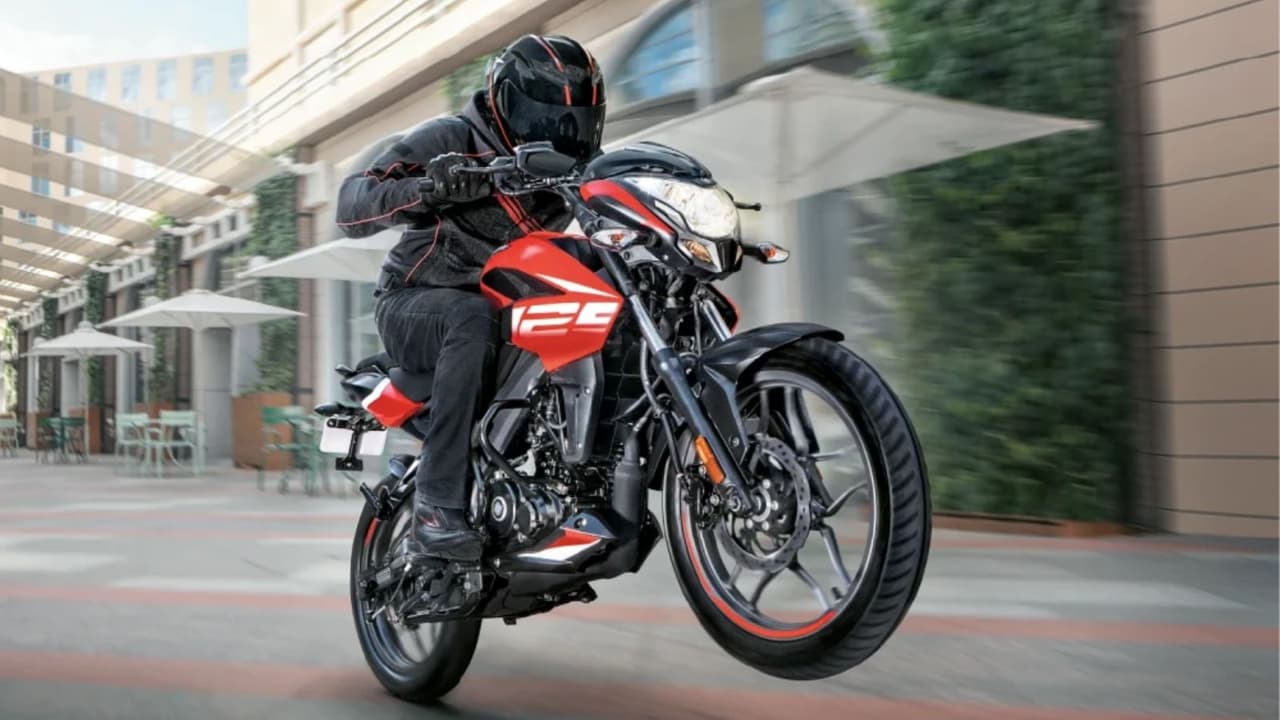
Bajaj’s Pulsar family is in the middle of a proper makeover, and the NS160 looks like the next motorcycle in line. Fresh spy images show the sporty 160cc streetfighter without camouflage, wearing new WP-branded USD forks, a rectangular TFT display and updated switchgear.
That matters because the current Pulsar NS160, while still a strong all-rounder, has been feeling a little long in the tooth compared with the brand’s newer, tech-heavy offerings. Bajaj has already refreshed the NS200, NS400Z, N250, NS125 and even the Pulsar 125/150 range. The NS160 now appears to be getting the same treatment.
What the spy shots reveal
The updated bike keeps the familiar NS look intact. You still get the muscular tank, sharp extensions, split seat, underbelly exhaust and the same compact, aggressive stance that made the Pulsar NS line popular with young riders.
The visible changes are all in the equipment list:
- WP-branded USD front forks
- New TFT instrument cluster
- Revised switchgear with a directional pad on the left
- Red switches on the right-hand pod
The current NS160 already uses USD forks, but the new WP branding suggests a hardware upgrade. Bajaj appears to be borrowing the same playbook it used on the updated Pulsar NS200, which also gained a more premium front suspension setup.
The TFT screen is the other big talking point. Bajaj has been rolling out a 5-inch display across several Pulsar models, and the NS160 is likely to get a similar unit with smartphone connectivity, document storage and Google Maps mirroring. Whether it gets all the electronic extras seen on larger Pulsars, such as traction control or ride modes, is still unconfirmed.
Engine and hardware
Mechanically, the current Pulsar NS160 uses a 160.3cc, oil-cooled, twin-spark, four-valve, fuel-injected engine. Output is rated at 17 PS at 9,000 rpm and 14.6 Nm at 7,250 rpm.
Other key specs on the present model include:
- 37 mm USD forks
- Nitrox rear monoshock
- 300 mm front disc, 230 mm rear disc
- Dual-channel ABS
- 17-inch alloy wheels
- 100/80 front and 130/70 rear tubeless tyres
- 12-litre fuel tank
- 152 kg kerb weight
If Bajaj keeps the engine unchanged, the gains will likely be in refinement, convenience and showroom appeal rather than outright performance. That said, the new gearbox and electronics seen on some recent Pulsars suggest the company is trying hard to push the entire range upmarket without completely losing the value angle.
Part of a much bigger Pulsar refresh
The NS160 is not arriving in isolation. Bajaj has already launched or revealed several updated Pulsars in recent months. The Pulsar N250 update with TFT display and 6-speed gearbox is a reminder of how far the brand is willing to go on equipment, while the new Pulsar NS125 features and LCD screen show that even entry-level Pulsars are getting tech upgrades.
On the 200cc side, dealer material has also pointed to a more aggressive NS200 update with quickshifter, traction control, electronic throttle body, four ride modes and a TFT cluster. In that context, the NS160’s spy shots fit into a larger plan: make every Pulsar feel fresher, more premium and more connected.
Where the NS160 sits in the market
At the moment, the Pulsar NS160 starts at Rs 1,26,301 ex-showroom, Delhi. Once the new TFT display and WP suspension make it to production, a price hike is almost certain.
That would still keep it in the fight against familiar rivals such as:
- TVS Apache RTR 160 4V
- Hero Xtreme 160R 4V
- Yamaha FZ-S Fi
- Honda Unicorn, for buyers who want something calmer and more commuter-friendly
For many Indian buyers, the NS160 sits in a sweet spot: sporty enough to feel special, but not as expensive or intimidating as the 200cc class. A better display and upgraded suspension could make it more tempting for college riders and city commuters who want a bit of attitude without moving up to a larger motorcycle.
When is the launch?
Bajaj has not officially announced a launch date yet. The bike has only been spotted in testing, and like the other recent Pulsar updates, it could arrive in the market soon if dealer activity is any indication.
What is clear is that Bajaj is not treating the Pulsar line as a static product anymore. It is updating models one by one, adding features that buyers actually notice on the showroom floor and in daily use. For a nameplate that has been around for 25 years, that kind of constant refresh is exactly how you keep people looking.